


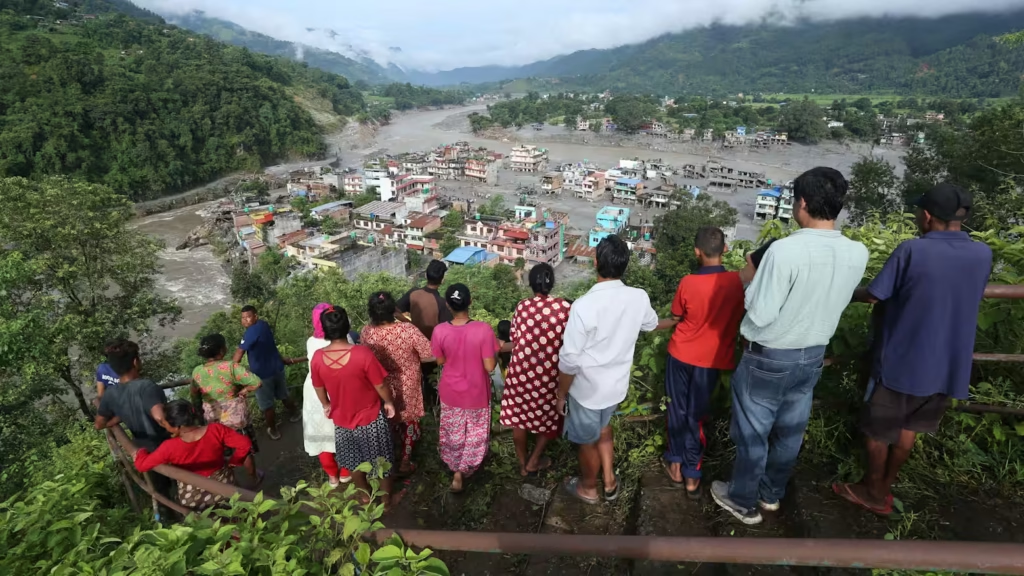

"I support this initiative because the people who would live with the consequences of SRM decisions are still largely missing from the places where those decisions are being shaped. In Ghana and across Africa, we are already absorbing climate impacts we did little to cause. Holding firm on restraint should never mean shutting us out of the knowledge. We need the capacity to ask our own questions, weigh the evidence ourselves, and help write the rules."

Ernest Ofori Co-Founder and Co-Executive Director
“Those hit hardest by climate change from mountain communities in the Himalayas to vulnerable frontlines must shape the conversation on SRM. I stand with the Middle Path Initiative to ensure local voices guide this future. Responsible research means nothing without climate justice, honest dialogue, and strict safeguards to protect the communities most at risk.”
Sanot Adhikari Executive Director
“I support this initiative because decisions about SRM could have implications across nearly every aspect of public life, from climate, health, and food systems to forests, oceans, and livelihoods. Yet today, too few voices are meaningfully engaged in the conversation. Whether SRM ultimately proves promising or problematic, civil society has a critical role to play in bringing real-world perspectives, surfacing risks and tradeoffs, and helping ensure future decisions are made in the public interest.”

Natasha Vidangos Associate Vice President, Innovation and Technology Policy
“Working at the intersection of climate and health has taught me that those who bear the greatest consequences of climate decisions are not always those shaping them. For Africa, SRM raises questions not only about planetary cooling, but about whose risks count, whose knowledge informs decisions, and who is accountable for the consequences. I am part of this initiative because uncertainty must never become a justification for exclusion or haste. We need the freedom to ask difficult questions, the discipline to exercise restraint, and the legitimacy to choose our collective future.”

Ann Irungu Global Health & Climate-Responsive Implementation Science
“The decades ahead remain critical. Actions and inactions will bear consequences for generations to come. The world that is fast approaching temperatures once considered dangerous cannot ignore approaches that could bring the temperatures down relatively quickly and cheaply, not because we would necessarily want to do so, but because someone else might. Agendas are usually not set by the people who remain absent from the tables where decisions are made, but by those who have the capacity and will to engage and steer the discussions. SRM is not science fiction but a real emerging topic that is becoming increasingly hard to ignore in a burning world. At the same time, we have to make sure that any proposed ideas do not cause more harm than they aim to prevent. That’s why I support this Initiative, which places its emphasis on inquiry and restraint.”
Justus Lehtisaari Head of International Cooperation
“Recent climate disasters across the Himalayas and other vulnerable regions have left me deeply concerned for my family, community, and the Eastern Himalaya, where unmitigated warming threatens a dire future. As a climate justice advocate, I believe frontline communities’ lives, livelihoods, and biocultural heritage must be protected from a crisis they did not create. Technological interventions may be an option, but communities must understand the research, risks, and implications of SRM and other approaches. This initiative reflects civil society’s concerns while allowing responsible scientific inquiry and innovation for the long-term welfare of all communities.”
Rituraj Phukan Director, Healthy Climate Initiative & Chairman, Indigenous People's Climate Justice Forum
“Ending deforestation, sustainable agriculture and accelerating the energy transition are part of Brazil’s core answer to climate change - actions that deliver emission reductions and carbon removal; SRM can never replace that. But UNEP’s best-case pathway still peaks at 1.7–1.8°C, putting at risk the Amazon and the rains that our harvests, hydropower and development depend on - rains SRM could also alter. Latin American voices must help decide how SRM is studied, governed, or rejected.”
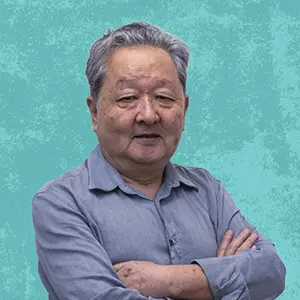
Roberto Kishinami Senior Lead Specialist
“We do not need to decide the future of SRM today. We do need governance to guide inquiry, sustain restraint on deployment, support preparedness, and enable legitimate future choices in the context of climate risk management during periods of overshoot, as highlighted in recent UNEP assessments.”
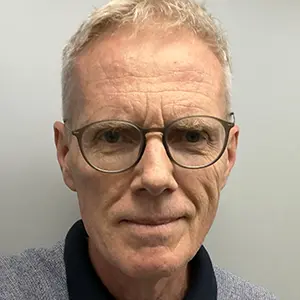
Kai-Uwe Barani Schmidt Volunteer Senior Expert, ICS Instituto Clima e Sociedade (Brazil); Formerly DED at C2G initiative